

Google rankings can drop because search demand changed, a technical problem blocked pages, the website was redesigned or migrated, content became less useful, competitors improved, or Google's systems changed. First confirm what actually fell; do not rewrite the whole site based on one keyword-tracking alert.
Google's traffic-drop debugging guide recommends using Search Console to examine the shape of the decline. Compare a recent period with the previous period and, when the business is seasonal, compare the same dates from the prior year.
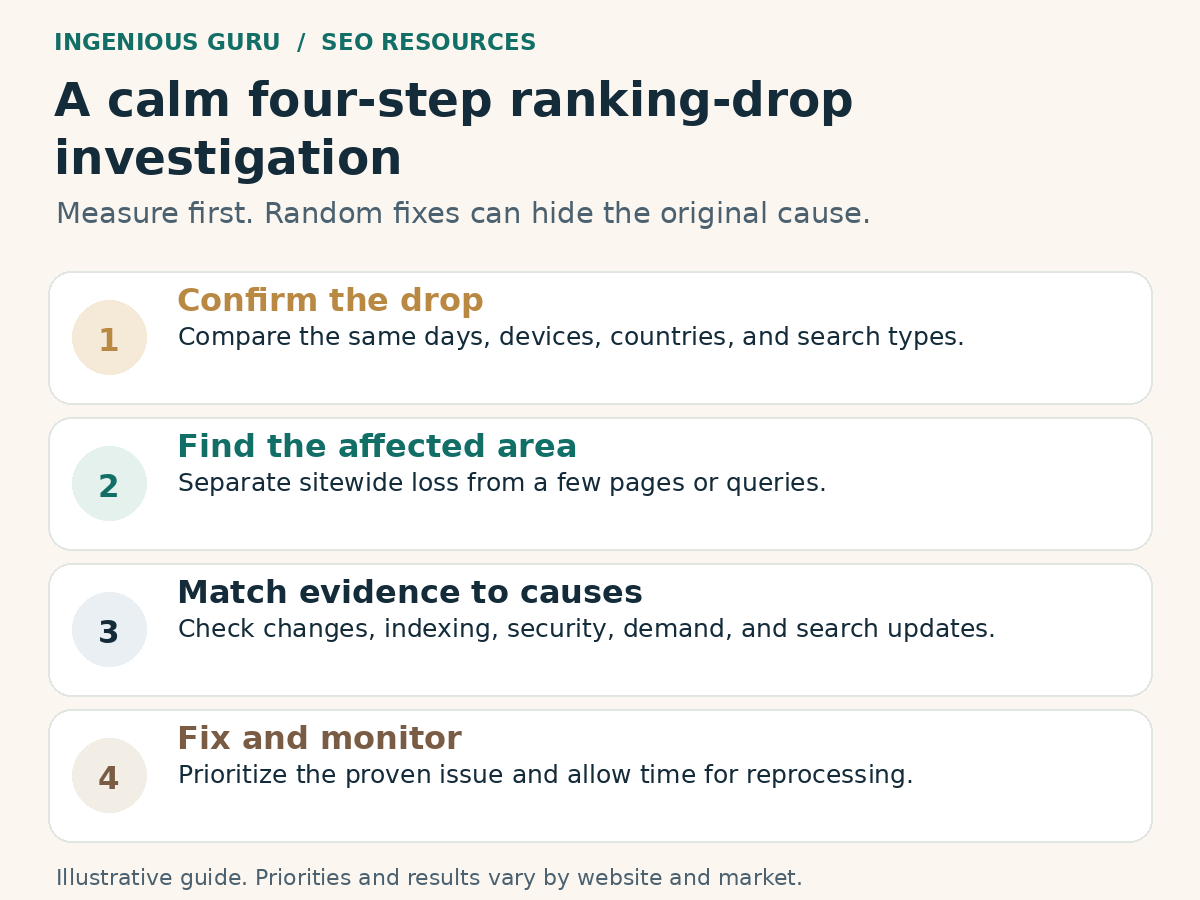
Confirm whether the loss is real and meaningful
Check organic clicks, impressions, average position, and conversions. A tracking failure can look like a traffic loss. A lower ranking for one query may also be offset by gains elsewhere. Filter Search Console by page, query, country, device, and search type to find where the change is concentrated.
Look for technical and website changes
Review releases made just before the drop: URL changes, redirects, canonical tags, noindex settings, robots.txt, navigation, deleted content, server outages, and JavaScript changes. Inspect a few affected URLs and confirm they still return the intended page and can be indexed.

Check Google notices and wider search conditions
Review the Google Search Status Dashboard for confirmed incidents and updates. Check the Manual Actions report and Security Issues report in Search Console. Use Google Trends or sales history to see whether fewer people are searching for the topic.
Assess content without chasing an algorithm
A broad update does not automatically mean your site was penalized. Google's core update guidance recommends assessing the site as a whole and improving content that is not helpful, reliable, or satisfying. Compare the affected pages with current results and identify what better serves the user.
Build a prioritized recovery plan
- Fix confirmed access, indexing, redirect, or server errors first.
- Restore valuable content or internal links lost during a redesign.
- Improve weak pages based on the search need—not keyword repetition.
- Track affected pages weekly, but avoid changing them every day.
A practical first step: Export the affected pages and queries from Search Console, write down the exact drop date, and list every website change made during the previous two weeks.
If the evidence is hard to separate, Ingenious Guru can perform a focused SEO audit to identify the likely cause, the pages at risk, and the safest order of fixes.