

IngeniousGuruIngeniousGuru
SEO

Is SEO worth paying for in 2026?

January 15, 2025

SEO can be worth paying for in 2026 if potential customers search for what you sell, a new customer has meaningful value, and you can invest for several months. It may not be the right first channel if you need sales immediately, have no clear offer, or cannot track enquiries and revenue.

AI search has changed how some results appear, but it has not made useful websites irrelevant. Google's guidance for AI Overviews and AI Mode says the same foundational SEO practices still apply and there are no special extra technical requirements for appearing as a supporting link.
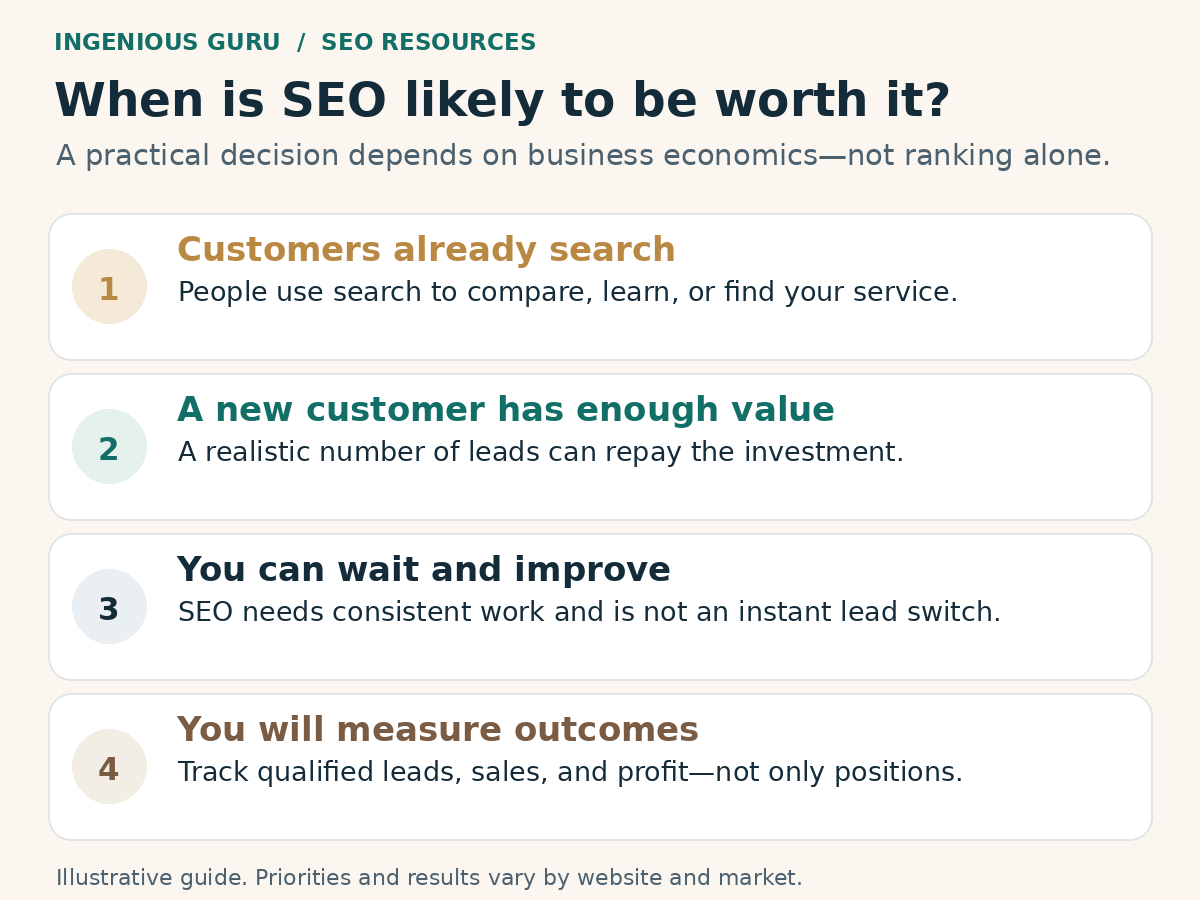
Four-part scorecard for deciding whether SEO is worth paying for in 2026.
SEO makes business sense when demand, economics, patience, and measurement align.

Judge SEO by qualified business outcomes

Rankings and traffic are useful signals, but they are not the final return. Track calls, forms, booked appointments, sales, and gross profit from organic search. A page that brings 100 relevant visitors and five good enquiries can be more valuable than one that brings 2,000 visitors who never buy.

Use a simple break-even check

Divide the monthly SEO cost by the gross profit from an average new customer, then round up. If SEO costs $1,500 per month and an average customer contributes $750 in gross profit, two additional customers cover the monthly investment. This is a planning calculation; real results can vary from month to month.

Conceptual illustration of a business owner planning a long-term SEO investment with a calendar, website, and growing plant.
SEO is worth considering when search demand, customer value, and a patient improvement plan work together. Conceptual illustration.

SEO and paid ads solve different timing needs

Paid ads can create visibility as soon as a campaign launches, but traffic usually stops when spending stops. SEO takes longer and builds assets you own, such as service pages, guides, internal links, and brand mentions. Many businesses use ads for immediate demand while SEO develops a longer-term source of leads.

SEO is not worth paying for without a credible plan

Be cautious if the work is limited to automated reports, generic AI articles, or guaranteed positions. A useful plan should connect technical fixes, content, local presence, authority, and conversion improvements to specific customer searches. It should also explain what will be measured and what your team must provide.

Questions to answer before you invest

  • Which profitable services do customers search for?
  • What is a qualified lead and what is a new customer worth?
  • Can we support three to six months of consistent work?
  • Do we have tracking for calls, forms, bookings, or sales?

A practical first step: Pick one profitable service and estimate its search demand, conversion rate, and customer value. Use that page as a small, measurable SEO test before expanding.

If you want an evidence-based decision, Ingenious Guru's SEO audit and planning service can identify realistic opportunities and help you compare the likely work with your business goals.

Related SEO Resources

View All
SEO

How do I get my business on the first page of Google?

Focus on the searches your customers use, create helpful pages that match those searches, and make sure Google can find your website.

Read Resource
SEO

Why isn't my business website ranking on Google?

Your business website may not rank because Google cannot properly find the page, the page does not match what people are searching for, or other results appear more useful and trustworthy.

Read Resource
SEO

How long does SEO take to rank a new website?

A new website may be discovered and indexed within days or weeks, but meaningful SEO growth commonly takes several months.

Read Resource
SEO

How much does SEO cost for a small business?

Small-business SEO can cost from a few hundred dollars for a limited one-time task to several thousand dollars per month for ongoing strategy and execution.

Read Resource
SEO

Why did my Google rankings suddenly drop?

Google rankings can drop because search demand changed, a technical problem blocked pages, the website was redesigned or migrated, content became less useful, competitors improved, or Google's systems changed.

Read Resource
SEO

How do I rank for local keywords?

To rank for local keywords, connect one real service with one real location and create the best page for that need.

Read Resource
SEO

How can I get more organic traffic to my website?

To get more organic traffic, improve pages that already match valuable searches and create new pages only where a real customer need is missing.

Read Resource
SEO

How do I compete with bigger companies on Google?

A small business can compete with bigger companies on Google by choosing narrower searches, showing deeper firsthand expertise, building strong local trust, and making it easier for the right customer to act.

Read Resource
SEO

Can you audit my website and tell me why it's not ranking?

A useful SEO audit can explain the most likely reasons a website is not ranking and what to fix first. But an accurate diagnosis requires the website URL and, ideally, read-only access to Google Search Console and analytics.

Read Resource