

Yes—a useful SEO audit can explain the most likely reasons a website is not ranking and what to fix first. But an accurate diagnosis requires the website URL and, ideally, read-only access to Google Search Console and analytics. Without evidence, an "audit" is only a generic checklist.
A good starting point is Google Search Console, which shows search queries, landing pages, clicks, impressions, click-through rate, and average position. The URL Inspection tool shows whether an important page can be indexed and which canonical URL Google recognizes.
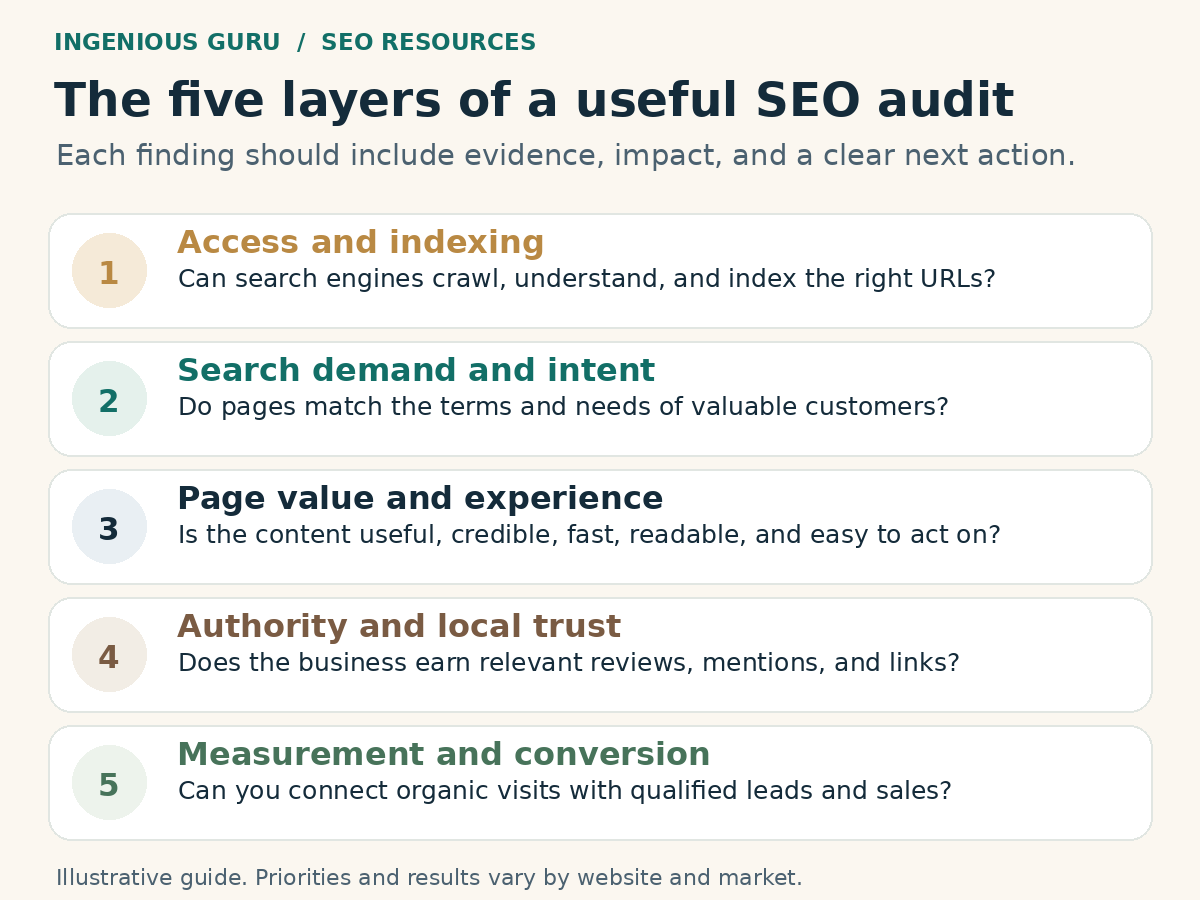
The audit should begin with your business goals
The auditor needs to know which services, products, locations, and customer actions matter most. A website can receive traffic and still fail the business. Clear goals help separate a minor technical warning from a problem that blocks qualified leads or revenue.
Technical checks should focus on important pages
Review crawling, indexing, status codes, redirects, canonical tags, robots.txt, sitemaps, mobile usability, speed, duplicate URLs, internal links, and structured data where relevant. Automated tools help find patterns, but a person must judge whether an issue affects a valuable page.

Content and competition explain why an indexed page may still lose
Compare each important page with the search need and the current results. Check whether the page answers the question completely, shows real experience, targets the right location, and gives the visitor a clear next step. Review competitor coverage and authority without copying their wording or page count.
The final report should prioritize action
A useful report groups findings by impact, confidence, effort, owner, and recommended order. It should include examples and explain why each change matters. Be cautious of a 100-page export with no priorities, guaranteed rankings, or a proposal that hides the actual work behind proprietary scores.
A free 20-minute self-check
- Inspect the homepage and one key service page in Search Console.
- Check whether each page receives relevant impressions and clicks.
- Search the target phrase and compare the intent of visible results.
- Test the contact path on a phone and confirm tracking works.
- Write down the three highest-impact gaps you can prove.
A practical first step: Gather the site URL, top three services, target locations, and the last three months of Search Console data. That is enough to make an initial audit much more specific.
If you want a professional review, Ingenious Guru offers a free website SEO audit that looks for technical issues, content gaps, and search opportunities before recommending a service plan.