

A professional business website can cost a few thousand dollars for a defined small-business project, while more complex builds can reach five figures or more. For an initial reference, a roughly 10-page site may fall around $3,000–$15,000. Smaller projects can cost less; custom applications can cost much more. The scope matters more than the label "professional."
Shopify's published website cost guide gives that broad 10-page reference. It is a planning range, not an industry average, a guaranteed quote, or Ingenious Guru's price list.
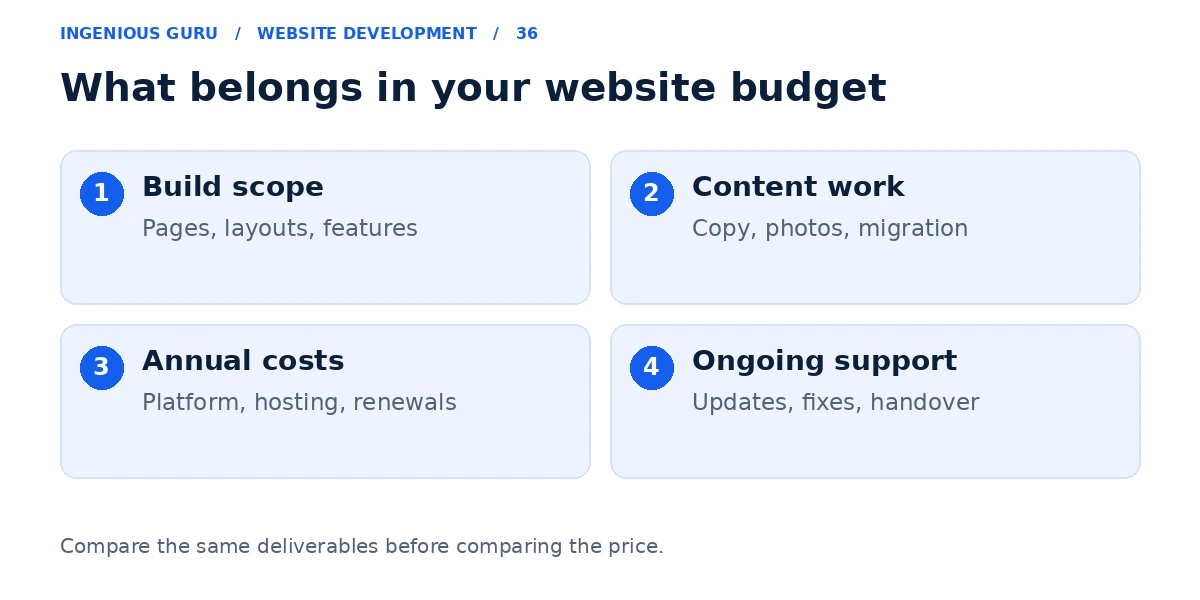
Define the job before comparing prices
Write down the pages, customer action, content you already have, and features the site needs. A five-page service website with a working enquiry form is a different project from an online store with product imports, payments, and shipping rules.
Count unique page layouts as well as page totals. Ten pages using two reusable layouts may require less design work than five pages with completely different structures.
Understand what increases the build cost
Custom design, copywriting, original photography, product migration, booking rules, CRM connections, and multilingual content all add work. A template can reduce layout time, but someone still needs to make the content accurate and test the customer journey.
For example, a plumber may need service pages and a quote form. A training company may also need course schedules, payment handling, and confirmation emails. Those requirements explain a price difference more clearly than a promise of unlimited pages.
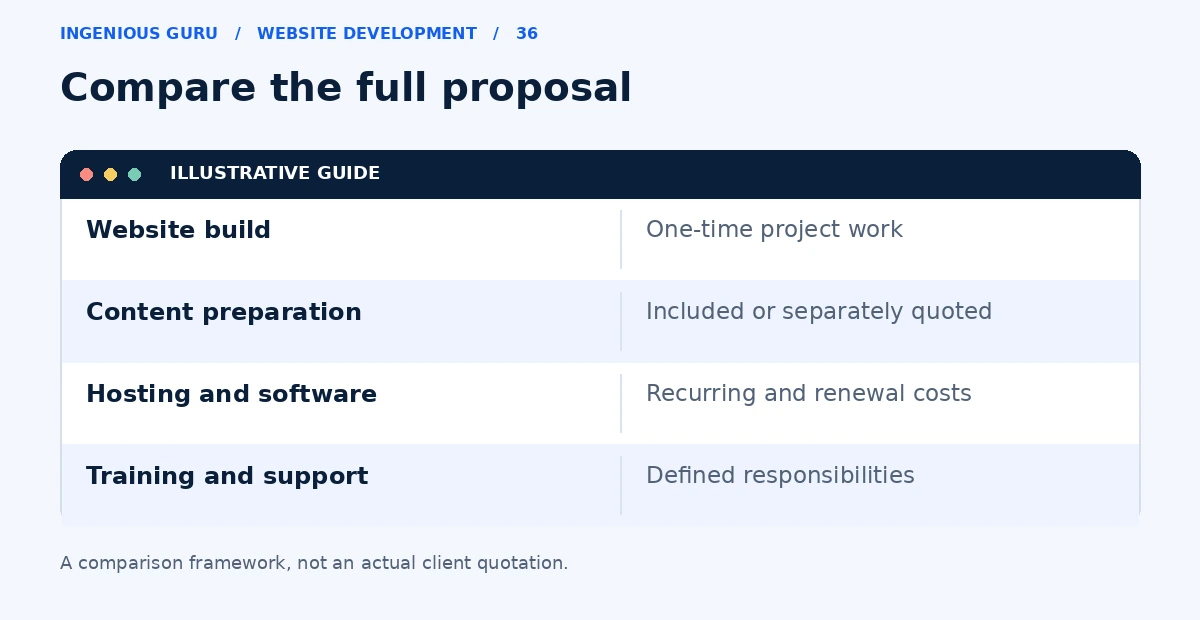
Budget for the first year as well as launch
Ask for two figures: the one-time build and the recurring costs. Include the domain, hosting or platform subscription, paid plugins, business email, and agreed maintenance. Confirm renewal rates and which services you can cancel independently.
A useful calculation is: first-year cost equals build cost plus annual subscriptions plus expected support. Your time spent writing content and learning the editor is also part of a DIY decision.
Compare the deliverables in writing
A proposal should identify the page scope, content responsibilities, revision rounds, integration work, launch checks, handover, and support period. Ask what happens if the scope changes and who controls the domain and administrator accounts.
Use the NYC website cost guide for a local quotation checklist, and the small-business website pages guide to define the scope first.
Questions to ask before approving a quote
- Which pages and unique layouts are included?
- Who provides copy, images, and product information?
- Which annual fees and renewal prices are additional?
- How are forms, bookings, and mobile layouts tested?
- What access, training, and support will you receive?
A practical first step: Create a one-page scope with required pages, features, content responsibilities, and the main conversion action. Send the same scope to each provider so the quotes are comparable.
If you need a scope before requesting a price, Ingenious Guru's website development team can discuss the pages, functionality, and handover your business needs. Send your requirements for a project-specific estimate.